
Flat Roofs Need Drainage and Waterproofing That Lasts
Flat Roofing in Cary for modern homes, garages, and additions vulnerable to standing water and membrane failure
Pro Built Co Roofing and Construction installs and maintains flat roofing systems throughout Cary, serving homeowners and property owners who rely on low-slope roofs that require specialized waterproofing and drainage design. Flat roofs are common on contemporary homes, garage additions, and covered patios, but without proper slope and membrane installation, they collect water that eventually seeps through seams and causes interior damage.
Flat roofing installations involve creating a subtle drainage slope that directs water toward scuppers or gutters, applying a durable waterproof membrane over the roof deck, and sealing all penetrations and edges with flashing that prevents water from migrating under the roofing surface. Unlike pitched roofs where gravity sheds water quickly, flat roofs depend on precise grading and robust membrane systems to handle ponding water during North Carolina's frequent heavy rain events. When drainage fails or membranes crack, water sits on the roof surface and eventually works its way into the structure, damaging ceilings, insulation, and framing.
If you notice water pooling on your flat roof after storms or see stains on interior ceilings below a low-slope section, a professional inspection will identify whether membrane damage or inadequate drainage is the cause.
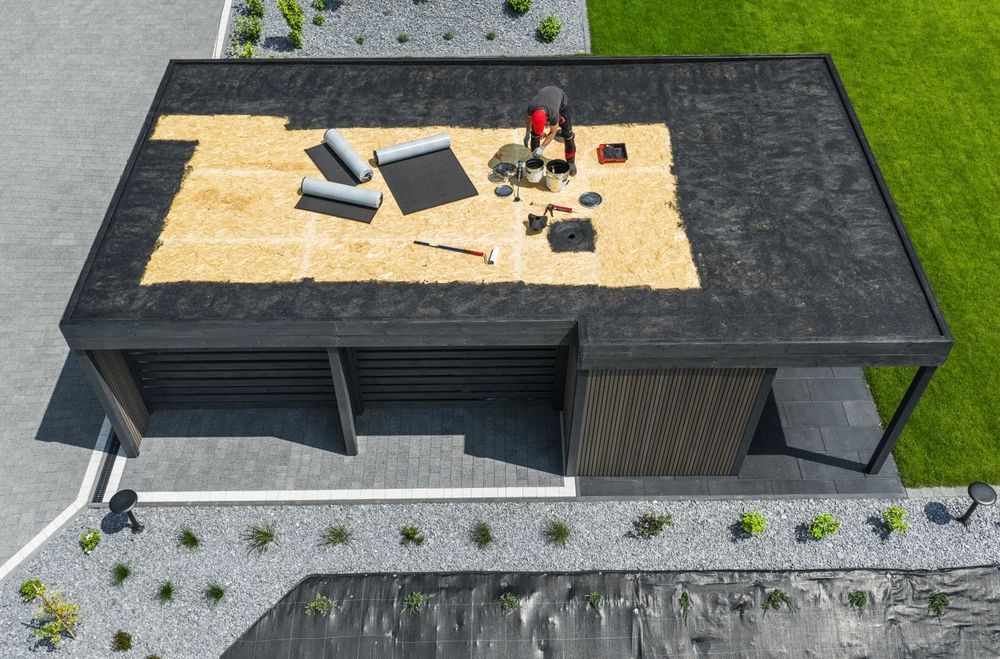

How Flat Roofing Systems Are Built to Prevent Leaks
The installation process starts with an evaluation of the existing roof deck to confirm it can support the weight of the new membrane system and any insulation layers. Contractors check for low spots where water might collect and adjust the substrate or add tapered insulation to create positive drainage toward roof drains or edge scuppers. A base layer of insulation board is fastened to the deck, followed by a waterproof membrane that may be heat-welded, adhered, or mechanically fastened depending on the system selected.
Once the membrane is in place, all seams are sealed with heat or adhesive to create a continuous watertight surface. Flashing is installed around roof penetrations such as HVAC units, vent pipes, and parapet walls, and these transitions are carefully detailed to prevent water from seeping under the membrane. After completion, you will see water flow consistently toward drains or edges without pooling in low areas, and interior spaces below the roof will remain dry even during sustained downpours. Pro Built Co Roofing and Construction ensures that flat roofing systems include proper edge termination and secure flashing to handle wind-driven rain.
Routine maintenance such as clearing debris from drains and inspecting membrane seams extends the life of flat roofing systems exposed to heat, UV radiation, and seasonal temperature swings. Property owners should schedule inspections after major storms to catch small issues before they require full membrane replacement.
Common Questions About Flat Roof Installation
Property owners considering flat roofing systems often have questions about materials, drainage, and maintenance requirements specific to Cary's weather patterns and building conditions.
What causes water to pool on a flat roof after rain?
Inadequate slope or settling of the roof deck creates low spots where water collects, and proper drainage design or tapered insulation corrects these areas during installation.
How do waterproof membranes differ from traditional roofing materials?
Flat roof membranes are applied in large sheets and sealed at seams to form a continuous barrier, unlike overlapping shingles that rely on gravity to shed water.
Why is flashing especially critical on flat roofing systems?
Without steep slopes to direct water away from edges and penetrations, any gap in flashing allows water to migrate under the membrane and into the building structure.
When should a flat roof be inspected for damage?
Annual inspections and additional checks after severe storms or hail events help identify membrane punctures, open seams, or drainage blockages before leaks develop.
What will I notice after a new flat roof membrane is installed?
Interior ceilings will stay dry during heavy rain, roof drains will flow freely without overflow, and no water will remain on the roof surface hours after a storm.
Pro Built Co Roofing and Construction provides guidance on membrane options and drainage solutions tailored to your roof's layout and exposure. Addressing flat roof issues early prevents the interior water damage that results from prolonged membrane failure or poor drainage design.